

Imagine opening your fridge and having it chat back. Sounds like something out of a sci-fi movie, right? Welcome to the world of smart refrigerators, where technology meets your leftovers. These high-tech wonders not only keep your food fresh but also help you manage your grocery list, suggest recipes, and even remind you when that milk is on the brink of a sour adventure.
Overview of Smart Refrigerators
Smart refrigerators offer users advanced functionalities that enhance food management and convenience in the kitchen. These innovative appliances incorporate technology to assist with various tasks beyond food preservation.
What Is a Smart Refrigerator?
A smart refrigerator refers to a refrigerator equipped with internet connectivity and advanced sensors. It provides features such as inventory tracking and integration with smart home systems. These appliances allow users to monitor food items remotely, receive notifications about inventory levels, and access recipes directly from the refrigerator’s interface. Enhanced communication capabilities make it easier to manage grocery shopping and meal planning effectively.
Key Features of Smart Refrigerators
Key features of smart refrigerators encompass multiple technological advancements. Many models include touch screens that display recipes and grocery lists. Voice control functionality enables users to interact with the appliance through smart assistants. Some refrigerators offer temperature control adjustments remotely, ensuring food remains fresh. Additional features might include cameras that enable users to view the contents from smartphones, making shopping more efficient. Integration with grocery delivery services streamlines the process, allowing for seamless ordering of essential items.
Benefits of Smart Refrigerators
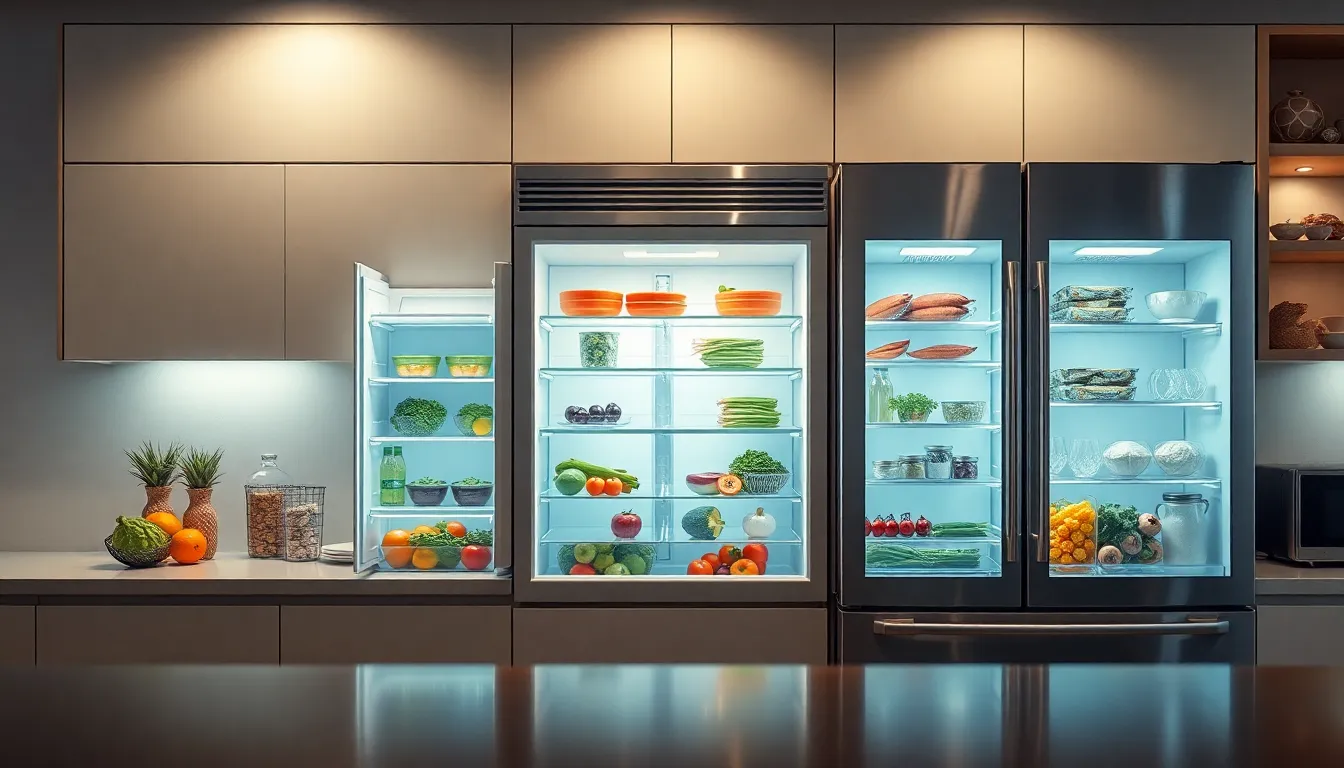
Smart refrigerators provide numerous advantages that enhance kitchen management and efficiency.
Energy Efficiency
Smart refrigerators optimize energy usage through advanced technology. They often feature energy-saving modes that adjust temperature based on usage patterns. Reports indicate that smart refrigerators can save up to 30% more energy compared to traditional models. Sensors monitor door openings and automatically adjust cooling levels to minimize waste. Many models provide real-time energy consumption data, allowing users to track efficiency. Additionally, users can program these appliances to run during off-peak energy hours, leading to lower utility bills. Such features contribute to a more sustainable household while lowering energy expenses.
Increased Convenience
Smart refrigerators offer unparalleled convenience in meal planning and grocery management. Users can create and manage grocery lists directly from the refrigerator interface or through mobile apps. Voice control functionality allows for hands-free access to recipes and inventory checks. By integrating with delivery services, users can order groceries with a few taps or voice commands. Cameras inside the appliance enable users to see contents without opening the door, facilitating effective meal planning. Notifications about expiration dates help reduce food waste by encouraging timely consumption. In addition, touch screens provide interactive access to meal suggestions based on available ingredients.
Popular Smart Refrigerator Brands
Several leading brands dominate the smart refrigerator market, each offering unique features and benefits. These brands exemplify the fusion of technology and convenience in modern kitchens.
Brand Comparison
Samsung and LG are often highlighted for their innovative designs and extensive features. Samsung’s Family Hub offers large touch screens and entertainment options, while LG focuses on efficient inventory management with its SmartThinQ technology. Whirlpool also stands out, providing simplicity with its smart features, such as easy grocery list management. Bosch emphasizes quality and a premium feel, integrating seamlessly with home automation systems. When comparing brands, consider energy efficiency, control options, and user reviews to find the best fit.
Innovative Models
Refrigerators like the Samsung Family Hub and LG InstaView lead the pack in smart features. The Samsung model incorporates multiple cameras for easy inventory viewing through a mobile app, making it simple to check supplies. LG’s InstaView offers a unique knock-to-see feature, allowing users to view the contents without opening the door. Whirlpool’s smart refrigerator includes a customizable display for grocery lists, and Bosch offers smart technology integrated with voice assistants. Many brands now provide models equipped with advanced sensors, making them energy efficient and user-friendly. When exploring options, look for variations in technology and connectivity.
How to Choose the Right Smart Refrigerator
Choosing the right smart refrigerator involves assessing personal needs and understanding budget constraints. Smart features can enhance the kitchen experience, but each user’s requirements differ.
Consider Your Needs
Analyze specific requirements before selecting a model. Type and capacity of the refrigerator matter, especially for larger families or those who frequently entertain. Evaluate desired features such as touch screens, cameras, and app connectivity, which enhance functionality. Consider energy efficiency ratings since they impact long-term savings. Users may also prefer features like space-saving designs or customizable storage options, depending on kitchen layout. Prioritize smart integrations that align with existing home automation systems, creating a seamless user experience.
Budget Considerations
Establishing a budget influences the selections available. Smart refrigerators range from $1,000 to over $5,000, varying significantly based on features and brand reputation. Users should account for installation costs if required, as these can add to the initial investment. Evaluate potential long-term savings from energy-efficient models, as many can deliver substantial reductions in utility bills. Comparing warranties and customer service options also contributes to overall value. Prioritize quality over price to ensure a reliable appliance meets expectations.
Future Trends in Smart Refrigerators
Innovation drives the future of smart refrigerators. Increased integration with artificial intelligence enhances user experience, enabling machines to learn preferences over time. Voice recognition technology becomes more sophisticated, simplifying interaction and allowing users to issue commands seamlessly. Smart refrigerators may feature enhanced security protocols, ensuring sensitive data remains protected as connectivity expands.
Sustainability emerges as a crucial trend. Manufacturers incorporate eco-friendly materials while optimizing energy consumption further. Studies indicate energy-efficient models can save users up to 50% in energy costs in the long run. Smart refrigerators may include solar compatibility, allowing users to harness renewable energy sources.
Advanced food management is on the rise. Inventory tracking will evolve, linking directly with AI-driven meal planning apps. Users might receive personalized recipe suggestions based on existing inventory, reducing food waste significantly. Integration with agricultural databases could inform consumers about seasonal produce, promoting local sourcing.
Additionally, customization options could increase. Different materials and colors may enable users to tailor appliances to their kitchen aesthetics. Modular designs may allow consumers to upgrade specific components, keeping appliances relevant without complete replacements.
Connectivity with other smart home devices continues to grow. Smart refrigerators might sync with other appliances, creating a holistic smart kitchen ecosystem. Users can control cooking times, temperature, and even synchronize shopping lists across devices.
Overall, the future holds promising innovations for smart refrigerators, focusing on enhanced efficiency, user-centric design, and sustainability. As technology progresses, these appliances will transform how households manage food and energy consumption.
Smart refrigerators are revolutionizing the kitchen experience by combining convenience with advanced technology. These appliances not only preserve food but also assist with meal planning and grocery management, making everyday tasks easier and more efficient. With features like remote monitoring and energy-saving modes, they cater to modern lifestyles while promoting sustainability.
As technology continues to evolve, smart refrigerators are expected to become even more intuitive and eco-friendly. Users can look forward to enhanced functionality that integrates seamlessly into their smart home ecosystems. Investing in a smart refrigerator means embracing a future where food management is streamlined and energy consumption is minimized, ultimately leading to a smarter and more sustainable household.