
As the clock ticks down to critical budget deadlines, the House of Representatives faces a pivotal moment with the upcoming vote on a continuing resolution. This legislative maneuver is designed to keep the government funded and operational while lawmakers negotiate long-term spending plans. With various factions within Congress holding differing priorities, the outcome of this vote could have significant implications for federal programs and services.
Understanding the dynamics of this vote is essential for grasping the current political landscape. It not only highlights the urgent need for fiscal responsibility but also reveals the complexities of bipartisan cooperation in an increasingly polarized environment. As representatives prepare to cast their votes, citizens and stakeholders alike watch closely, knowing that the decision made today will shape the future of government funding and policy direction.
Overview Of The House Vote On Continuing Resolution
The House vote on the continuing resolution serves as a pivotal moment for federal funding. This vote aims to avert a government shutdown while lawmakers finalize long-term spending plans. Various factions within Congress hold differing priorities that influence their positions on the continuing resolution.
Key details of the vote include:
- Funding Levels: The proposed resolution specifies funding levels for numerous federal programs. An agreement on these levels remains contentious among representatives.
- Duration of Funding: The resolution outlines the duration of funding, often set for a limited period. This timeframe aims to provide lawmakers with additional time to negotiate comprehensive spending bills.
- Bipartisan Support: Understanding bipartisan cooperation’s role in this vote is critical. The success of the continuing resolution often hinges on cross-party collaboration to secure a majority.
- Impact on Federal Services: The outcome of the vote directly affects the continuity of essential federal services. Government operations in areas such as healthcare, education, and infrastructure rely on the funding preserved by the resolution.
This vote represents a significant decision point in the broader context of fiscal responsibility. As legislative leaders work through the complexities of government funding, the continuing resolution highlights the challenges that define today’s political landscape.
Key Provisions Of The Continuing Resolution

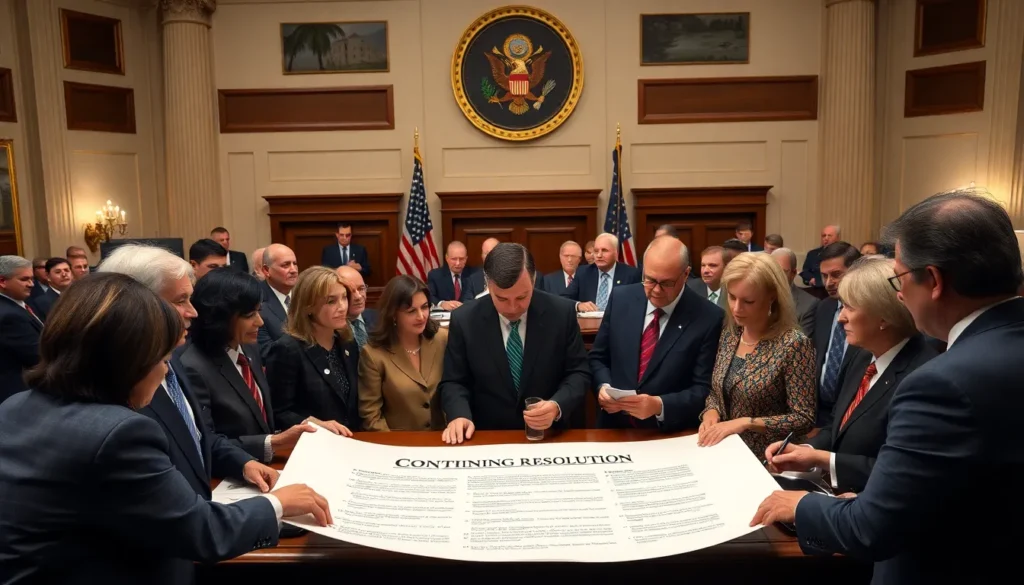
The continuing resolution outlines crucial funding and policy decisions to sustain government operations temporarily. It aims to ensure stability across various federal programs while enabling lawmakers to negotiate longer-term fiscal policies.
Funding Allocations
The continuing resolution allocates $1.5 trillion in discretionary spending, covering essential federal programs. Key allocations include:
- Defense Spending: $780 billion directed towards military and defense operations.
- Healthcare: $150 billion allocated for healthcare services, including Medicaid and Medicare support.
- Education: $50 billion assigned to early childhood and K-12 education programs, promoting equitable access.
- Infrastructure: $30 billion designated for critical infrastructure projects, enhancing transportation and public works.
- Disaster Relief: $10 billion for emergency management, addressing natural disaster recovery efforts.
These allocations reflect negotiated compromises among various congressional factions, impacting federal services’ breadth and quality.
Policy Changes
The continuing resolution incorporates significant policy changes relevant to federal operations. Notable adjustments include:
- Funding Extensions: Continued financing for existing federal programs, preventing abrupt service interruptions.
- Temporary Waivers: Allowances for certain regulatory adjustments, streamlining processes affected by budget constraints.
- Flexibility in Spending: Provisions granting federal agencies the ability to reallocate funds as needed, ensuring effective resource use amid uncertainties.
These policy changes aim to address immediate budgetary challenges while providing a framework for ongoing negotiations on comprehensive fiscal measures.
Political Reactions And Implications
The House vote on the continuing resolution elicits strong reactions from both sides of the political spectrum. Leadership factions express their views, which could shape the implications for future spending and policy directions.
Support From Leadership
Leadership from both parties expresses varied levels of support for the resolution. Democrats emphasize the necessity of bipartisan efforts to ensure essential services remain funded. They highlight the resolution’s allocations, such as $150 billion for healthcare and $50 billion for education, addressing urgent needs in these sectors. Republican leaders assert that the resolution provides a responsible framework for immediate funding, enabling ongoing discussions for long-term fiscal policies. They believe that the defense allocation of $780 billion addresses national security concerns effectively. This united front among certain leaders may secure the necessary votes for passage.
Opposition Perspectives
Opposition voices raise significant concerns regarding the resolution’s provisions and implications. Some conservative members criticize the continued high levels of discretionary spending, claiming it undermines fiscal responsibility. They advocate for deeper budget cuts and suggest that current allocations do not reflect the urgency of economic challenges. Progressive factions express disappointment over insufficient funding for social programs, arguing that the resolution fails to prioritize critical issues such as climate change and income inequality. These contrasting viewpoints indicate potential challenges in achieving consensus as the political landscape remains divided. The opposition’s critiques could signal obstacles for future budget negotiations and affect the resolution’s overall support within Congress.
Potential Outcomes And Future Impact
The ongoing House vote on the continuing resolution carries significant implications. Both immediate and future consequences for the federal government, lawmakers, and citizens rely on the resolution’s approval.
Short-Term Ramifications
Short-term effects manifest quickly after the vote. Approval guarantees continued funding for critical programs and services while essential federal operations remain uninterrupted. The allocation of $1.5 trillion enables financing for defense, healthcare, and education initiatives, allowing agencies to maintain their functions without sudden cuts. Delays in passing the resolution might lead to government shutdowns, halting operations in various federal departments, affecting employees, contractors, and the public relying on these services. Immediate funding uncertainty reduces the ability of federal agencies to plan and execute programs effectively.
Long-Term Consequences
Long-term consequences hinge on the resolution’s success and subsequent negotiations. Stability in funding creates a more predictable environment for comprehensive fiscal planning, fostering bipartisan discussions on future budgets. Continuous resolutions that prioritize areas such as healthcare and infrastructure lay groundwork for larger spending debates in the future. However, failure to reach a consensus may result in prolonged budgetary strife and hinder efforts to address fiscal challenges. Scarce resources might perpetuate existing disparities in social programs, leading to greater public discontent and demands for reform. Ongoing debates can shift power dynamics within Congress, ultimately influencing future spending priorities and policy directions.